1. Colour
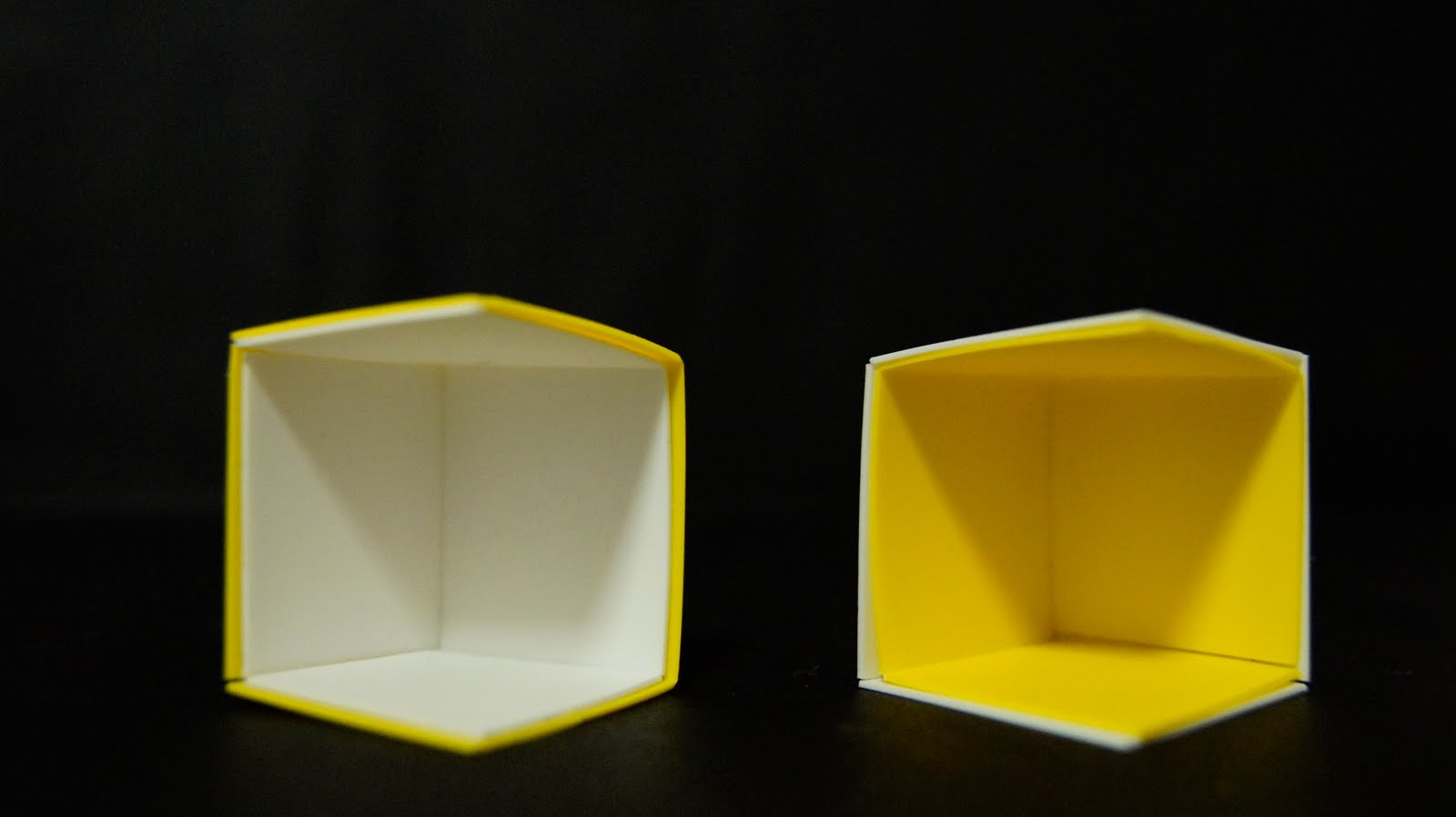
 "What if the colours of the exterior and interior exchanged?"
With a white interior, space is perceived to be heightened, and also not as clearly defined.
If the exterior colour, yellow, is to be exchanged to the interior, wall elements may be overwhelming for the psychological mind due to its intensity. This may cause degrees of intimidation and nervousness - thus not an ideal house-life.
With an exterior yellow facade, the effects of the sun shining onto the surfaces will reflect off each other (e.g. internal courtyard), which would then enter the interior space, producing a yellow-glow/cast to the rooms inside. The white interior walls directly exposed to the openings will hence reflect the yellow tinted light back into the rest of the interior, behind solid walls.
 2. Detailing/Whole
Through geometric analysis, there is a centralised space (circle) through which the dividing wall invades. The triangular elements such as that of the internal courtyard and the wall-to-column connection across the U-structure superimposes with the circle.
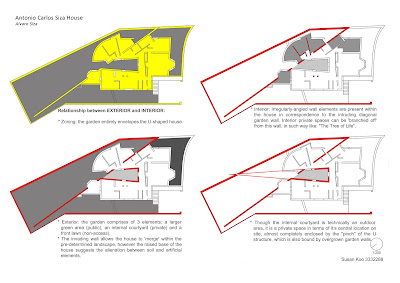
3. Zoning/Spaces (Exterior vs. Interior)
The garden entirely envelopes the built mass.


The garden wall intruding the leg of the U-shaped house, 'merging' the landscape with the artificial. However, the raised base of the house signifies its alienation to the natural environment.
4. Final (combined ideas)
- Proposal for activities interacting both exterior and internal spaces, in an imagined landscape
In proposal for improving the interaction between spaces both public and private, exterior and interior zones, I would embrace the idea of the "Tree of Life" in which a central element (similar to that of the dividing garden wall branches off to private spaces, in that geometry can be deduced in terms of their connection to the whole site.


 "What if the colours of the exterior and interior exchanged?"


